How to Fix a Green Pool Step by Step
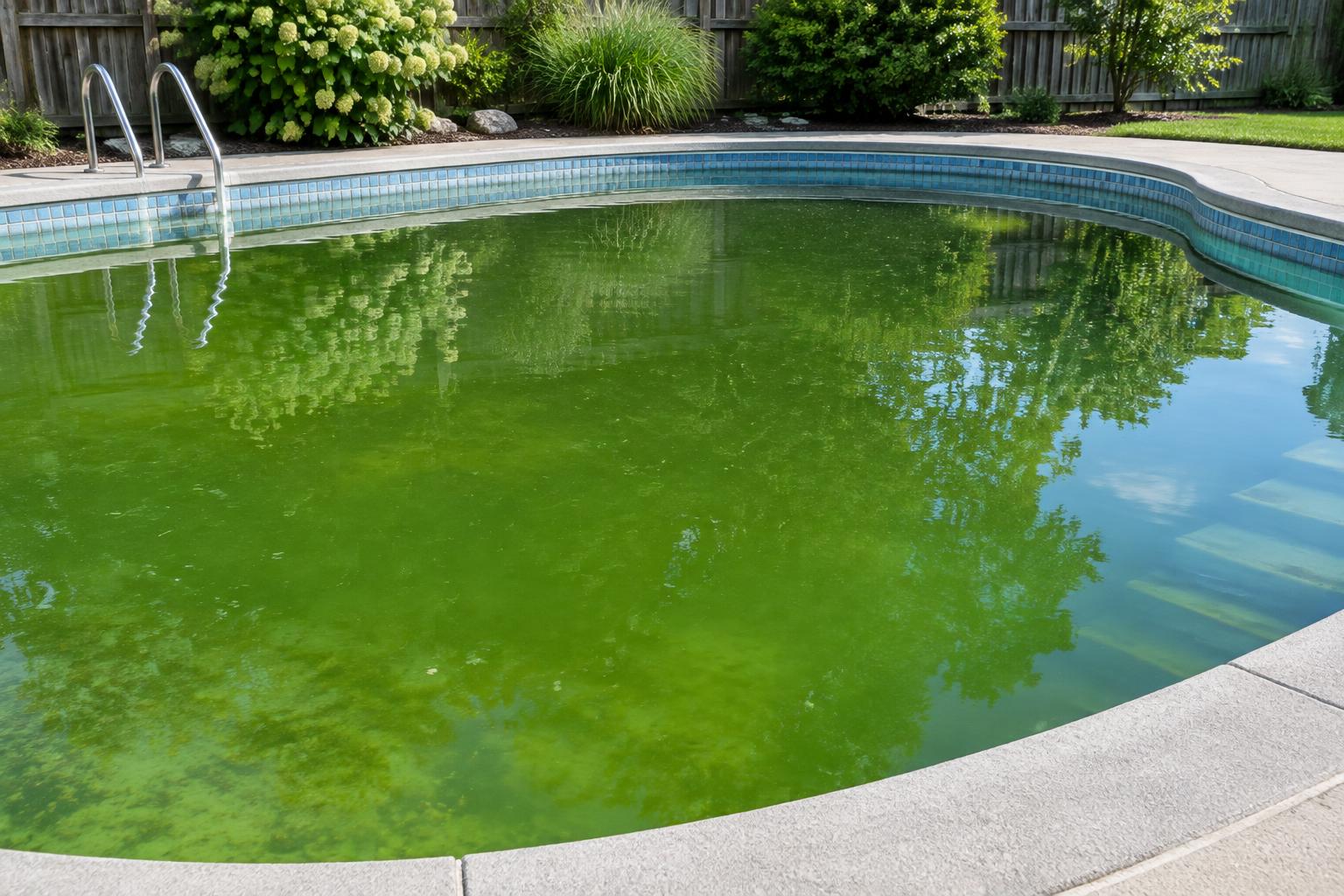
To fix a green pool, keep swimmers out, remove debris, test the water, balance pH, and treat with chlorine according to your pool’s volume, stabilizer level, and product directions. Brush surfaces, circulate and filter the water, and retest until algae is controlled and visibility returns. First check whether the green color may come from metals rather than algae.
Why is your pool green?
Algae is a common cause of green pool water. It may grow when effective sanitizer levels fall, circulation is poor, or leaves and other contaminants increase chlorine demand. Warm weather and missed maintenance can make the problem worse.
However, green does not automatically mean algae. Dissolved copper or other metals may discolor otherwise transparent water, sometimes after chlorine is added. Yellowish water against a blue pool finish can also look green.
| What you notice | Possible explanation | Useful next check |
|---|---|---|
| Green, hazy water with slippery walls | Algae growth | Test free chlorine, pH, and stabilizer |
| Clear green water after adding chlorine | Metal-related discoloration | Test copper and iron; review recent treatments |
| Green patches around steps or corners | Poor circulation or localized algae | Check return direction and brush hidden areas |
| Green water with heavy debris | High sanitizer demand, potentially with algae | Remove debris and run a complete water test |
These clues are not a diagnosis. PoolPilot AI can help interpret a photo or test readings and suggest next steps, but a photo cannot establish sanitizer levels or confirm that water is safe to swim in. Analyze my pool — free.
Before you start: supplies and safety
Gather a leaf net, a surface-compatible brush, a vacuum, a reliable test kit, and the treatment products appropriate for your pool. A drop-based kit that measures free chlorine and combined chlorine is particularly useful during cleanup. You will also need a stabilizer, or cyanuric acid (CYA), reading.
Keep people and pets out while the pool is green, especially when the bottom or drain cannot be seen clearly. Poor visibility is a safety hazard regardless of the cause.
Follow every product label, including protective equipment, application instructions, and swimming restrictions. Never mix pool chemicals together, combine different chlorine products, or reuse contaminated scoops. Do not pre-dissolve a product unless its label specifically directs you to do so. Store chemicals separately as instructed.
How to fix a green pool: 8 steps
-
Confirm your pool volume and inspect the equipment.
Chemical doses depend on water volume and product strength. Use your pool records or a volume calculator rather than guessing. Check that the pump primes properly, baskets are clear, valves are correctly positioned, and return jets have flow.
If equipment leaks, trips a breaker, or will not circulate water, stop and arrange service before chemical treatment. Do not run a pump dry.
-
Remove leaves and other debris.
Skim the surface and scoop material from the floor. Empty skimmer and pump baskets with the equipment safely switched off according to its instructions.
Physical removal reduces the organic material consuming sanitizer. If the bottom is hidden, work from the deck with a leaf rake rather than entering the water. Avoid sending large quantities of leaves through the vacuum system.
-
Test the water before choosing treatment.
Measure free chlorine, combined chlorine, pH, total alkalinity, and CYA. Calcium hardness can also help identify water-balance concerns. Record the results so you can track changes instead of repeatedly adding products by appearance alone.
If water is transparent but green, particularly after refilling or adding chlorine, consider copper and iron testing before aggressive algae treatment. More chlorine may worsen metal discoloration. Very high chlorine can also interfere with some tests; follow your kit’s limits and instructions.
-
Address pH and stabilizer concerns.
Before raising chlorine substantially, adjust pH into your product’s recommended treatment range. For many residential pools, approximately 7.2–7.4 is a practical starting point, provided it suits the pool and treatment instructions.
CYA protects chlorine from sunlight, but higher CYA also changes the chlorine level needed to control algae. If CYA exceeds the recommended range, consider professional guidance on water replacement or another appropriate remedy. Never fully drain a pool without checking structural, groundwater, and local discharge risks.
-
Add the appropriate chlorine treatment.
Choose a chlorine product suitable for your pool surface and equipment. Calculate the dose using pool volume, current free chlorine, product concentration, and label directions. The appropriate treatment level also depends on CYA; there is no universal “one bag” solution.
Liquid pool chlorine may be useful because it does not add CYA or calcium. Stabilized chlorine products add CYA, while calcium hypochlorite adds calcium. If the label does not resolve your situation, ask a qualified pool professional rather than improvising a higher dose.
Add products separately, exactly as directed, with the required circulation and waiting periods.
-
Brush thoroughly and circulate the water.
Brush walls, steps, ladders, corners, and the floor to loosen algae and expose it to sanitizer. Use a brush approved for your finish; a metal brush can damage some surfaces.
Run the filtration system for extended periods during cleanup, potentially continuously if the manufacturer permits and equipment is operating normally. Direct returns to improve circulation in neglected areas. A saltwater chlorine generator may not meet heavy cleanup demand by itself; follow its manufacturer’s recovery guidance.
-
Retest and maintain treatment while filtering.
Algae and debris can consume chlorine quickly. Retest as your treatment instructions recommend and replenish according to the measured result—not the previous dose. Use a kit capable of measuring the treatment range.
Water may turn grayish or cloudy as algae dies. That is not necessarily a reason to add another chemical: filtration must remove suspended material. Monitor filter pressure and clean or backwash at the manufacturer’s specified increase above clean pressure. Do not open a pressurized filter.
-
Vacuum settled material and confirm recovery.
Vacuum remaining debris and brush any persistent patches. Vacuuming to waste may help with heavy deposits if your system supports it and local rules allow discharge; watch the water level so the pump does not run dry.
Resume swimming only when the floor and drain are clearly visible, sanitizer and pH meet applicable guidance, and every treatment product’s reentry conditions are satisfied. Clear-looking water alone does not prove the pool is safe.
What if the pool stays green?
Before adding algaecide, clarifier, or flocculant, review the test results and equipment. Persistent green water may reflect inadequate chlorine for the CYA level, ongoing debris, metal staining, or ineffective filtration.
Algaecide is not typically a substitute for adequate sanitizer. Some products contain copper, which can contribute to staining. Flocculants also require specific removal methods and may be unsuitable for your filter.
Consult a professional for persistent discoloration, suspected contamination, damaged equipment, serious chemical imbalances, or an uncertain diagnosis. Avoid stacking treatments without checking compatibility.
How to help prevent green water returning
Maintain sanitizer in the recommended range for your pool and CYA level. Test regularly, with extra checks after storms, heavy use, or unusually warm weather. Brush routinely, remove leaves promptly, and maintain filter flow.
PoolPilot AI offers three free assessments per month with no credit card required. Upload a pool photo or test readings for an AI-powered assessment and suggested next steps: Analyze my pool — free.
FAQ
How long does it take to fix a green pool?
A mild algae problem may improve within a few days, while severe growth or filtration issues can take longer. Use test results, visibility, and treatment instructions—not a promised deadline—to judge progress.
Can I swim in a green pool?
Avoid swimming until the cause is addressed, visibility is restored, and water chemistry meets swimming guidance. Green water may indicate inadequate sanitation, and poor visibility creates an additional hazard.
Why is my pool still green after shocking it?
Possible reasons include insufficient treatment for the CYA level, rapid chlorine consumption, poor circulation, or metals. Retest before adding more. Transparent green water after chlorine treatment particularly warrants checking for metals.
Do I need to drain a green pool?
Usually, algae alone does not require complete draining. Partial water replacement may be appropriate for excessive CYA or certain contaminants. Seek professional advice first: draining can damage some pools, especially where groundwater is high.