Ideal Pool pH and Chlorine Levels: A Practical Guide
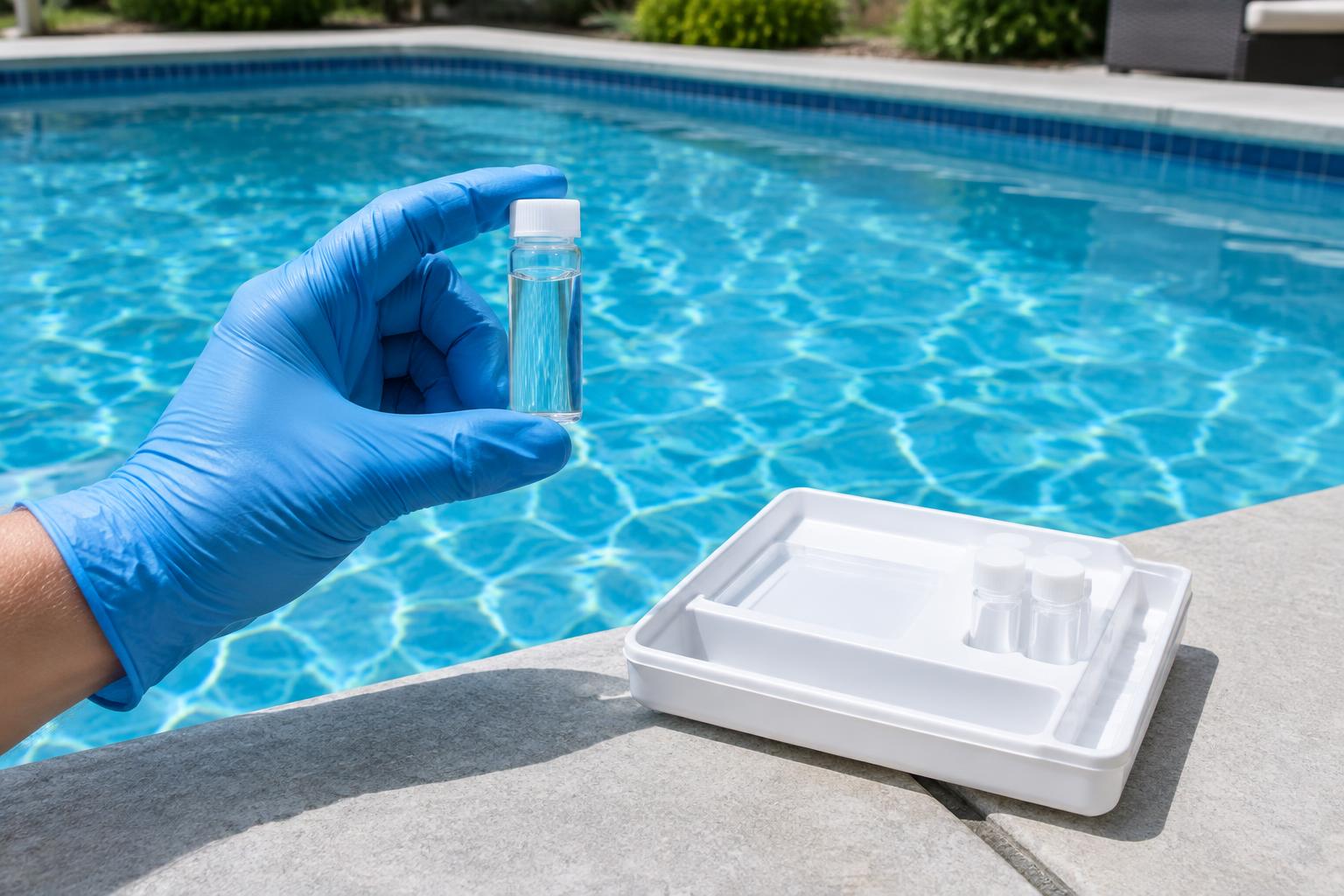
For most residential pools, aim for a pH of 7.2–7.8, with 7.4–7.6 a useful everyday target. Free chlorine typically needs to be at least 1 ppm without cyanuric acid, or 2 ppm when cyanuric acid is used, but those are minimums—not universal operating targets. Your appropriate chlorine range depends on stabilizer levels, product directions, and local guidance. Test both before deciding whether to swim or add chemicals.
What do pool pH and chlorine actually measure?
pH describes how acidic or basic your pool water is. Chlorine is a sanitizer that helps control germs and algae. They perform different jobs, but you need to manage them together.
Water can look clear while having insufficient sanitizer. It can also contain plenty of chlorine while having a pH that contributes to irritation or equipment problems. Appearance alone cannot confirm that a pool is safe to use.
Why pH matters
The recommended pH range helps balance swimmer comfort, sanitizer performance, and protection of pool surfaces and equipment.
- Below 7.2: Water may become more corrosive to metal components and contribute to surface damage or irritation.
- Above 7.8: Scaling and cloudy water may become more likely, depending on calcium hardness and other water conditions.
- Around 7.4–7.6: You have a practical adjustment target with some room for normal drift.
pH is only one part of water balance. Total alkalinity, calcium hardness, temperature, and other factors also influence whether water tends to corrode or form scale.
Why free chlorine matters
Pool tests may report several chlorine measurements:
- Free chlorine (FC): Chlorine available to sanitize the water.
- Combined chlorine (CC): Chlorine that has reacted with contaminants, including swimmer waste.
- Total chlorine (TC): Free chlorine plus combined chlorine.
You can calculate combined chlorine by subtracting free chlorine from total chlorine. For example, total chlorine of 3.5 ppm and free chlorine of 3.0 ppm indicate 0.5 ppm combined chlorine.
For routine sanitation decisions, focus on free chlorine, not total chlorine alone. A strong “chlorine” smell may be associated with chloramines; it does not reliably tell you whether available sanitizer is high or low.
Quick-reference pool chemistry table
These are starting points for residential swimming pools, not hot tubs. Follow applicable local requirements and instructions for your pool equipment and chemical products.
| Measurement | General reference | What to remember |
|---|---|---|
| pH | 7.2–7.8 | 7.4–7.6 is a useful everyday target |
| Free chlorine, no stabilizer | At least 1 ppm; 1–3 ppm is a common operating range | Sunlight and swimmer demand may cause rapid losses |
| Free chlorine, with stabilizer | At least 2 ppm | The operating target may need to be higher depending on CYA |
| Combined chlorine | Ideally near zero | A persistent reading around 0.5 ppm or above warrants investigation |
| Cyanuric acid (CYA) | Often 30–50 ppm for outdoor, manually chlorinated pools | Salt systems may specify a different range |
| Total alkalinity | Often 80–120 ppm | The appropriate range depends on sanitizer and pool specifications |
Do not treat a minimum chlorine reading as a comfortable buffer. If chlorine regularly drops below the appropriate minimum between tests, your maintenance routine needs adjustment.
How pH and stabilizer affect chlorine
In water without stabilizer, the balance between chlorine’s chemical forms changes with pH. As pH rises, a smaller share is present as the more active sanitizing form. That is one reason managing pH matters even when a chlorine test looks acceptable.
However, familiar charts about chlorine becoming dramatically less effective at higher pH often leave out cyanuric acid, also called CYA or stabilizer. In stabilized pools, chlorine chemistry is more complex, and the relationship between free chlorine and CYA becomes especially important.
CYA helps protect chlorine from sunlight, but it also reduces the immediately active chlorine fraction. More stabilizer is not automatically better: high CYA can make an otherwise familiar free-chlorine reading inadequate.
Check whether your chlorine adds stabilizer
Dichlor and trichlor products add CYA along with chlorine. Over time, regular use may increase stabilizer beyond your intended range.
Liquid chlorine and salt chlorine generators do not add CYA. However, outdoor pools using either may still need a separately managed stabilizer level.
If your chlorine seems difficult to maintain, check CYA before repeatedly adding more sanitizer. Excessive CYA may require partial water replacement. Consider professional advice before draining, particularly where groundwater, structural risks, or water restrictions are concerns.
How to test and adjust pH and chlorine
Use a reliable test kit that measures pH and free chlorine, plus a CYA test when stabilizer is present. A drop-based kit, especially one using FAS-DPD for chlorine, may provide more useful detail than basic strips.
- Check the pool before swimming. Do not swim if the bottom is not clearly visible, equipment is malfunctioning, or readings are outside applicable swimming guidance. Clear water alone is not enough.
- Collect a representative sample. Follow the kit’s instructions. Typically, sample below the surface and away from return jets, skimmers, and chemical feeders.
- Record the relevant readings. Measure pH and free chlorine. Include total chlorine, CYA, and alkalinity when troubleshooting. Note recent chemical additions, rain, or heavy use.
- Interpret chlorine alongside CYA. Choose an operating target using product directions, equipment guidance, and applicable local recommendations. Do not assume 2 ppm suits every stabilized pool.
- Plan separate corrections. In routine balancing, bringing pH into range before a planned high-chlorine treatment is often helpful. But do not leave a pool open with inadequate sanitizer while waiting to perfect pH. Keep swimmers out and address both issues according to labels.
- Dose for your actual pool volume. Use the product’s dosage instructions and concentration. Add chemicals separately, allowing the specified circulation and waiting time between additions.
- Retest before adding more. Allow the label-specified mixing time. Confirm swimming conditions and any product-specific reentry requirements before reopening the pool.
Very high chlorine can interfere with some pH tests. If a result seems inconsistent, check your kit’s interference limits rather than chasing the reading with additional chemicals.
For help organizing your results, PoolPilot AI accepts pool photos or test readings and provides an AI-powered assessment with suggested next steps. Photos may reveal visible symptoms, but they cannot measure pH or chlorine; include actual readings whenever possible. Analyze my pool — free.
Why readings keep drifting
A single adjustment may not solve a recurring pattern. Look for the underlying cause:
- pH repeatedly rises: Aeration, alkalinity, new plaster, or salt-system operation may contribute.
- pH repeatedly falls: Acid additions or acidic sanitizer products may be involved.
- Chlorine disappears quickly: Sunlight, insufficient stabilizer, swimmer load, or organic contamination may increase demand.
- Chlorine stays unexpectedly high: Feeder output may exceed demand, or recent dosing may have been excessive.
Test regularly—typically daily during active use, and more often when conditions change. Keep a short log so you can adjust gradually rather than repeatedly overshooting.
Chemical safety comes first
Follow product labels and never mix pool chemicals. Do not combine different chlorine products or allow chlorine and acid to contact each other. Use the specified protective equipment, storage conditions, dosing location, and circulation procedure.
Keep chemicals away from children and pets. Consult a qualified pool professional for serious issues, persistent unexplained imbalance, suspected contamination, or equipment damage. Leave the area and seek emergency assistance for strong fumes or a suspected dangerous chemical reaction.
FAQ
Is 7.8 pH too high for a pool?
It is generally the upper end of the recommended range. Consider adjusting toward 7.4–7.6 if it keeps rising. First confirm the result and check alkalinity rather than adding acid based on one questionable test.
Is 3 ppm chlorine enough?
It may be appropriate, but the answer depends on CYA and pool conditions. It may be insufficient when stabilizer is elevated. Check free chlorine—not just total chlorine—and use a target appropriate for your pool.
Should I adjust pH or chlorine first?
For routine balancing, pH correction is often a useful first step, especially before elevated-chlorine treatment. Low sanitizer still needs prompt attention. Keep swimmers out when conditions are unsuitable, and make separate additions according to product instructions.
Can an AI assessment tell me exactly what to add?
An assessment may help interpret readings and prioritize actions, but dosing requires accurate volume, current tests, and product strength. PoolPilot AI offers 3 free assessments per month, with no credit card required. Use its guidance alongside labels, not as a substitute for testing or professional help. Analyze my pool — free.