How to Read Pool Test Strips Correctly: A Simple Guide
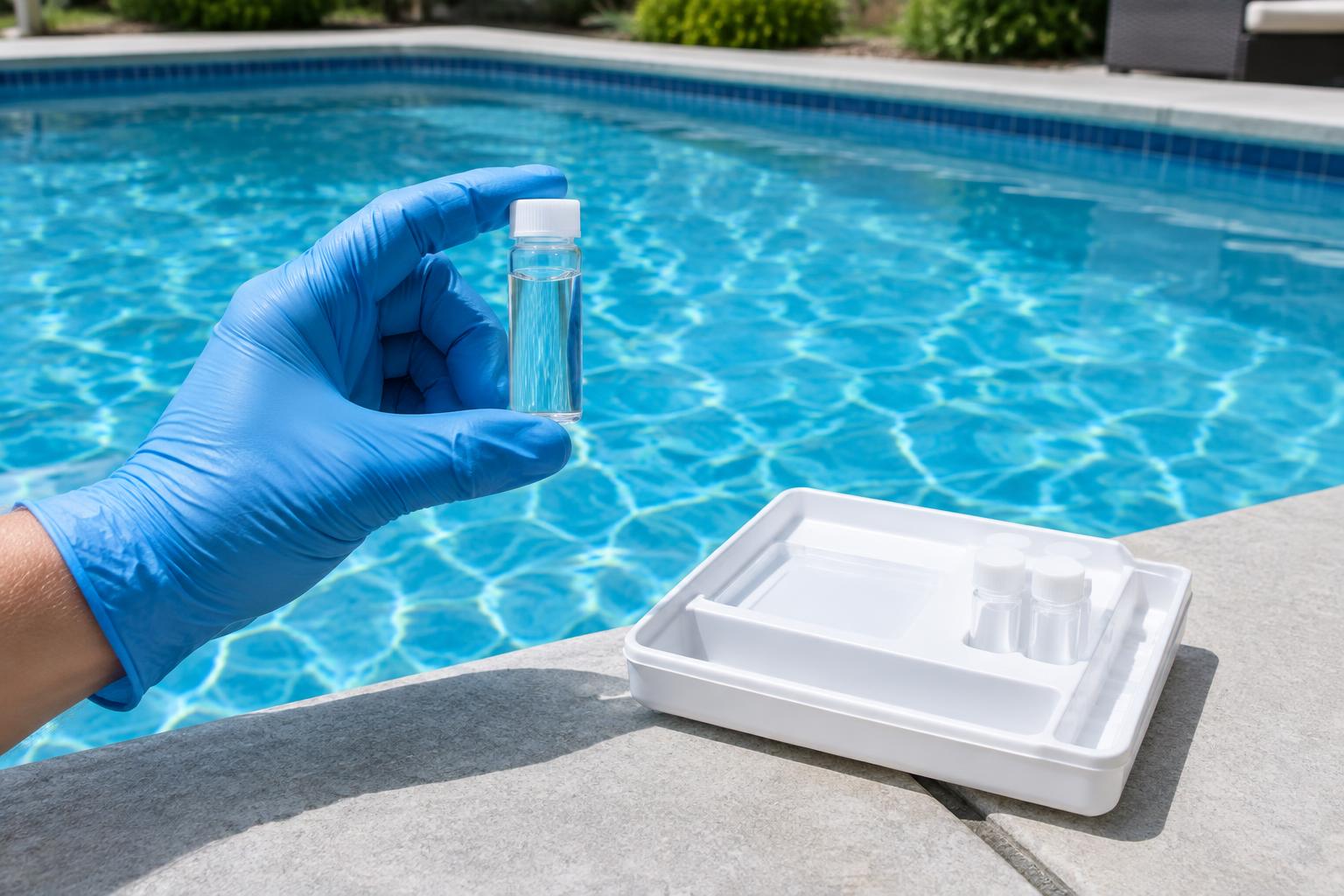
To read pool test strips correctly, collect a representative water sample, dip the strip exactly as its label directs, and compare each pad with the matching bottle chart at the specified time. Use bright, indirect daylight and record the results immediately. If a color is unclear or a reading seems unlikely, repeat the test before adding chemicals.
What pool test strips can—and cannot—tell you
Pool test strips offer a quick snapshot of water chemistry. Depending on the product, they may measure free chlorine, total chlorine, bromine, pH, total alkalinity, hardness, and cyanuric acid, also called stabilizer.
They are most useful for identifying trends and spotting results that need attention. However, their broad color intervals may not provide enough precision for calculating a substantial chemical dose or diagnosing a persistent problem.
The chart supplied with your exact product matters. Pad order, color scales, dipping instructions, and reading times can differ between brands—and between products from the same brand. A chart found online is not a reliable substitute unless it matches your strips exactly.
Before you test: set up for a reliable reading
Have the strip container, its instructions, a timer, and somewhere to record your results ready before opening the bottle.
Check the expiration date and storage requirements. Heat, humidity, and sunlight may damage the reactive pads. Keep the container tightly closed, leave its desiccant inside if supplied, and avoid storing strips in a hot equipment enclosure.
Your hands should be clean and completely dry. Remove one strip without touching the pads, then close the container promptly. Water transferred into the bottle may affect the remaining strips.
If you recently added a treatment, follow its label for circulation and retesting intervals. Testing too soon may capture a concentrated pocket of chemical rather than the pool’s overall condition.
How to read pool test strips correctly: 7 steps
-
Choose a representative sampling spot. Avoid testing directly beside a return jet, skimmer opening, floating chemical dispenser, or recent chemical addition. Take water from below the surface at a safely accessible location, following your test product’s sampling directions.
-
Use the specified sampling method. Some strips are dipped directly into the pool; others can be used with a freshly collected sample. If using a cup, choose a clean container free of soap or chemical residue and rinse it with pool water first. Test promptly.
-
Dip for the exact instructed duration. Fully wet the required pads. Do not assume every strip needs the same dip time, and do not swirl or move it unless the manufacturer directs you to do so.
-
Handle excess water as directed. Some products say not to shake the strip; others specify a particular motion. Follow your label rather than a general internet tip. Do not wipe or blot the reactive pads unless explicitly instructed.
-
Hold the strip in the required position and start timing. Many products call for a horizontal hold to limit water running between pads. Use a timer and follow any separate reading times given for different tests.
-
Match each pad to its own chart row. In bright, indirect daylight, compare the strip with the chart on its original container. Read at the specified time—not several minutes later, when colors may have continued changing. Avoid tinted sunglasses and strongly colored lighting.
-
Record the readings and any uncertainty. Note the date, time, results, and recent treatments or heavy pool use. If a pad falls between two blocks, record an approximate interval rather than inventing a precise number. Repeat questionable results with a fresh strip.
Quick reference: what each pad means
Check the labels on your container rather than identifying pads by position or color alone.
| Test label | What it indicates | Common interpretation mistake |
|---|---|---|
| Free chlorine | Chlorine available for sanitizing | Treating it as interchangeable with total chlorine |
| Total chlorine | Free chlorine plus combined chlorine | Assuming a high total reading means adequate free chlorine |
| Bromine | Sanitizer reading for a bromine system | Using a chlorine scale without the product’s conversion guidance |
| pH | How acidic or basic the water is | Confusing pH with total alkalinity |
| Total alkalinity | Water’s buffering capacity against pH changes | Assuming it measures the same thing as pH |
| Hardness | Calcium hardness or total hardness, depending on the strip | Assuming all hardness tests measure calcium alone |
| Cyanuric acid | Stabilizer concentration | Expecting fine precision from widely spaced color blocks |
Most concentration readings use parts per million, or ppm. pH does not. Target values depend on the sanitizer system, pool surface, equipment, and applicable guidance. A chart’s highlighted “OK” band is a starting point, not a substitute for your pool’s operating requirements.
Free chlorine versus total chlorine
The difference between total and free chlorine can indicate combined chlorine, but strips may not resolve a small difference accurately. If the results suggest a problem, confirm with a suitable drop-based test, such as a FAS-DPD chlorine test, or seek reliable professional testing before choosing treatment.
Why your strip colors may look wrong
The colors change after you read them
Reactive pads may keep developing as the strip dries. The valid result is the reading taken within the manufacturer’s specified window. Rechecking a dried strip later can be misleading.
The pads look streaky or bleed together
Possible causes include incorrect dipping, excess water, improper handling, or damaged strips. Repeat the test while following the instructions closely. If fresh strips from the same bottle repeatedly behave oddly, consider replacing the bottle or checking with another method.
A reading looks unexpectedly low after treatment
Do not automatically add more sanitizer. Some test chemistries may bleach out or become unreliable at very high sanitizer concentrations. Check the strip’s measuring range and interference warnings, then confirm with a method suitable for the expected concentration.
The color falls between chart blocks
Treat this as limited resolution, not a reason to guess an exact value. Small apparent changes may reflect lighting or interpretation rather than meaningful chemistry changes. Confirmation becomes more important when the result would trigger a substantial chemical addition.
Turn your readings into sensible next steps
Start by checking whether the test was performed correctly. Then compare confirmed results with guidance for your particular pool and sanitizer system. Avoid trying to correct every reading simultaneously: treatments can interact, and dosing depends on pool volume, product strength, and current chemistry.
PoolPilot AI lets you upload a pool photo or test readings for an AI-powered assessment with suggested next steps. For strip interpretation, include the readings you recorded, the strip brand, and relevant timing details. A photo alone cannot establish sanitizer levels or confirm that water is safe for swimming.
Always follow product labels, including protective equipment, dosing, circulation, and swimming restrictions. Never mix chemicals together or combine concentrated products in a container. Consult a qualified pool professional for serious issues, persistent unexplained readings, suspected contamination, or water too cloudy to see the bottom clearly.
FAQ
Should I shake a pool test strip after dipping it?
Only if its instructions tell you to. Different strips require different handling. Shaking, tapping, or wiping a strip contrary to its directions may change the result. Keep the original instructions handy rather than relying on habits from another brand.
Can I read a test strip from a photo?
A photo may help document a test, but lighting, camera processing, and screen settings can distort colors. Compare the strip with its physical chart at the required time first. If photographing it, include the matching chart and avoid treating a delayed photo as a valid reading.
How often should I test my pool water?
Follow your sanitizer system’s instructions and local guidance. Sanitizer and pH typically need more frequent checks than slower-changing parameters. Consider additional testing after heavy use, storms, or treatments, while respecting the required circulation and retesting intervals.
What should I do if repeated strip results disagree?
Check expiration, storage, sampling, and timing, then use a suitable drop-based kit or professional water test to confirm important discrepancies. PoolPilot AI can help organize your observations and suggest next steps, with three free assessments per month and no credit card required.