How to Get Rid of Algae in a Swimming Pool: A Practical Plan
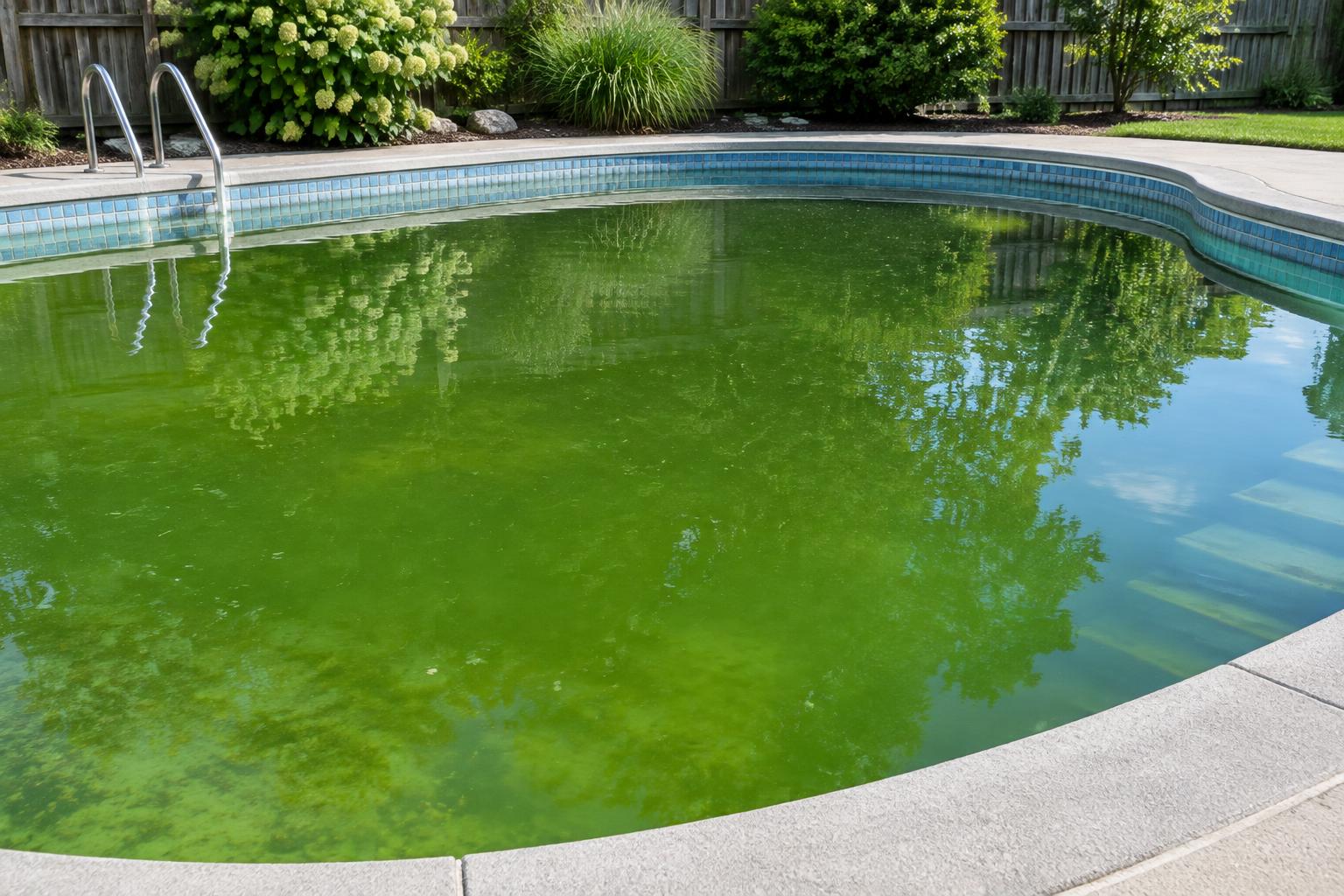
To get rid of algae in a swimming pool, test the water, remove debris, brush affected surfaces, and apply a chlorine treatment according to the product label and your pool’s conditions. Keep water circulating, maintain the filter, and remove settled debris. Treatment may require repeated testing and brushing; avoid swimming until visibility and chemical readings meet safe-use requirements.
Confirm that algae is the problem
Algae often appears as slippery surfaces, colored patches, or growth that returns after brushing. However, green water alone does not prove algae is present. Metals such as copper can tint otherwise clear water, while pollen or dirt may resemble yellow algae.
Before adding chemicals, inspect the steps, shaded walls, corners, and areas behind ladders. Note whether the material brushes away, feels slick, or returns quickly. These clues help, but testing remains essential.
| What you notice | Possible explanation | Useful next step |
|---|---|---|
| Green water with slippery walls | Green algae | Test sanitizer, pH, and stabilizer; brush surfaces |
| Yellow or tan deposits in shaded areas | Mustard algae, pollen, or dirt | Brush and observe whether deposits return |
| Persistent dark spots on plaster | Black algae or staining | Check surface compatibility before aggressive brushing |
| Clear water with a green tint | Dissolved metals | Test for metals before adding more treatment |
A photo can help document the pattern, but it cannot measure sanitizer or reliably distinguish every stain from growth. PoolPilot AI can assess a pool photo or test readings and suggest next steps. Include your pool surface, approximate volume, and recent chemical additions for better context: Analyze my pool — free.
Gather the information that controls treatment
There is no reliable universal dose for an algae outbreak. The amount and treatment approach depend on pool volume, product strength, water chemistry, and the severity of growth.
Use a suitable pool test kit to check:
- Free chlorine: The chlorine available for sanitizing.
- Combined chlorine: Helpful context for troubleshooting, though not an algae test by itself.
- pH: Important for swimmer comfort, equipment, and treatment planning.
- Cyanuric acid, or CYA: Stabilizer that affects chlorine requirements.
- Total alkalinity: Useful when evaluating pH adjustments.
A drop-based kit capable of measuring elevated chlorine can be useful during treatment. Some strips and basic kits may not provide enough detail to guide repeated dosing.
High stabilizer can make algae harder to control. If CYA exceeds the recommended range for your pool and sanitizer system, get advice about water replacement or other appropriate options. Never drain a pool casually: groundwater pressure, surface damage, and local discharge rules may create serious problems.
Remove pool algae in seven steps
1. Stop swimming and remove debris
Keep swimmers out during treatment. If you cannot clearly see the pool floor and main drain, where present, poor visibility is itself a safety concern.
Skim leaves and floating debris, then empty skimmer and pump baskets according to the equipment instructions. Removing organic material reduces the load the sanitizer must handle.
2. Check circulation and filter condition
Confirm that the pump is moving water normally and that return jets are unobstructed. Position adjustable returns to improve circulation without creating new dead spots.
Check filter pressure against its clean baseline. Clean or backwash only as directed by the manufacturer, including its specified pressure-rise threshold. Shut down and depressurize equipment before opening it. A dirty, damaged, or incorrectly assembled filter may undermine treatment.
3. Brush with tools suited to the surface
Brush walls, floors, steps, seams, and areas around fittings. Brushing loosens growth and helps treated water reach affected surfaces.
Use a brush approved for your finish. Nylon is typically appropriate for vinyl and fiberglass; abrasive brushes may damage them. Some plaster surfaces tolerate stronger brushing, but verify this with the surface manufacturer or pool professional.
For stubborn black spots, avoid scraping, applying concentrated chemicals directly, or rubbing chlorine tablets onto the surface unless an approved treatment specifically calls for it.
4. Adjust pH before raising chlorine
If pH needs correction, adjust it within the range specified by your treatment product and pool guidance before adding the algae-treatment dose of chlorine.
Follow each product’s directions for application, circulation, and retesting between additions. Do not add chemicals together or improvise waiting times.
Elevated chlorine can interfere with some pH tests. Check your kit’s interference limits rather than chasing a potentially inaccurate pH reading during treatment.
5. Apply the appropriate chlorine treatment
Use a pool sanitizer labeled for the intended treatment and calculate the dose from actual pool volume and product concentration. Account for CYA; a routine everyday chlorine reading may not be enough to control established algae.
If the label does not explain how to handle your conditions, ask the manufacturer or a qualified pool professional rather than guessing at an elevated target.
Never mix chemicals, including different chlorine products. Never combine chlorine with acid. Follow labels for protective equipment, storage, and application. Do not pre-dissolve a product unless its label instructs you to do so.
6. Retest, brush, and filter
Algae treatment is usually a process, not a single addition. Chlorine may fall as it reacts with contamination, so retest at the intervals specified by your treatment method and product instructions. Redose only as directed.
Continue brushing and run circulation as recommended for the equipment and treatment. Monitor filter pressure and clean when required. As growth is controlled, water may become cloudy while suspended material is filtered out.
7. Remove residue and confirm recovery
Vacuum settled material using a method compatible with your pool and filter. Vacuuming to waste may be useful where the system supports it, but it lowers the water level and must comply with local discharge rules.
Do not judge success by color alone. Look for no visible growth, clear water, and sanitizer readings that remain within the appropriate operating range without unexplained rapid loss. Resume swimming only when product re-entry instructions and applicable water-quality guidance are satisfied.
Adapt your approach for stubborn algae
Mustard algae may return in shaded areas or be reintroduced on brushes, toys, and cleaning equipment. Clean pool-contact items using methods compatible with their materials and any treatment label. Do not put every accessory in heavily chlorinated water; some may be damaged.
Black algae can be particularly persistent on porous finishes. Repeated surface-appropriate brushing and a targeted treatment plan may be necessary. Seek professional help for widespread spots, uncertain identification, or growth that survives a correctly performed treatment.
Algaecides are sometimes useful supplements, but they do not replace adequate sanitizer and filtration. Some copper-containing products may stain surfaces or discolor hair. Clarifiers and flocculants also have filter-specific requirements; avoid stacking products without a clear reason.
Prevent another outbreak
Check sanitizer and pH regularly, with extra attention after heavy use, storms, or equipment interruptions. Keep CYA within the recommended range, remove debris promptly, and brush areas with weak circulation.
Maintain the filter and address recurring circulation problems. A saltwater pool still depends on chlorine; its generator may not produce enough to overcome an established outbreak without a separate, compatible treatment plan.
If algae keeps returning, PoolPilot AI can help organize your observations and readings into practical next steps. It offers 3 free assessments per month, with no credit card required: Analyze my pool — free. Use it as guidance, not a substitute for reliable testing or professional help with serious issues.
FAQ
How long does it take to remove pool algae?
A mild outbreak may improve within a few days. Persistent growth, high CYA, or poor filtration may take longer. Let test results, visibility, and surface condition guide progress rather than a fixed deadline.
Can I swim in a pool with algae?
Avoid swimming until the problem is resolved and re-entry requirements are met. Algae may signal inadequate sanitation, slippery surfaces increase fall risk, and cloudy water can hide a swimmer in trouble.
Do I need an algaecide?
Not always. Proper chlorine treatment, brushing, and filtration may control many outbreaks. Consider an algaecide only when appropriate for the algae type, pool finish, and treatment plan, following its label carefully.
Why does algae return after treatment?
Possible causes include inadequate chlorine for the CYA level, missed patches, contaminated accessories, or poor circulation. Check those factors before adding more products. Repeated failures warrant professional diagnosis.