Saltwater Pool Maintenance Checklist: Weekly and Monthly
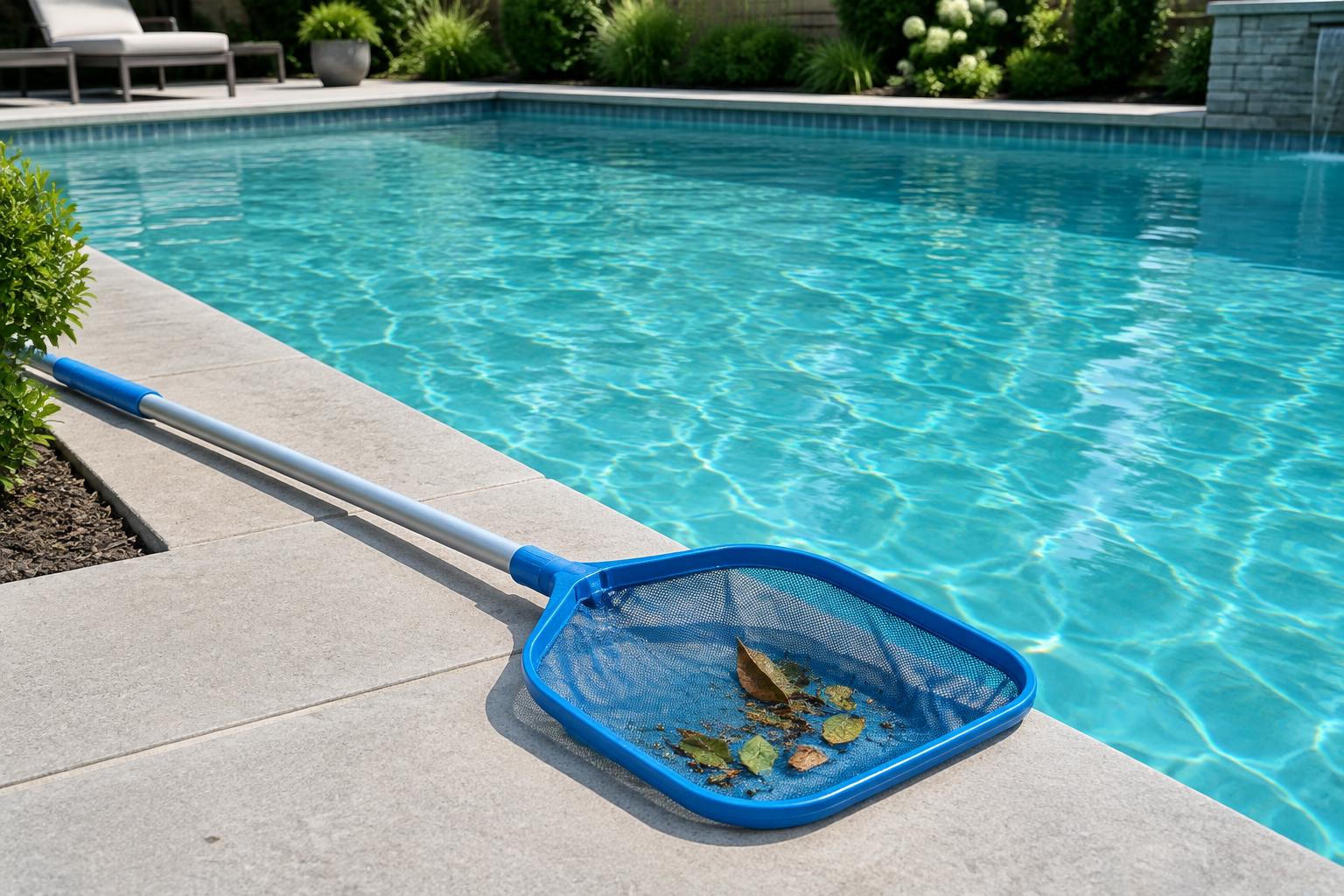
A saltwater pool maintenance checklist should include testing chlorine and pH, checking circulation, removing debris, monitoring salt levels, and inspecting the salt chlorine generator. Test water at least two or three times weekly during swimming season, with more frequent checks during heavy use or hot weather. Follow your equipment manual for salt targets, cell inspection, and cleaning.
What makes saltwater pool maintenance different?
A saltwater pool still uses chlorine. Its salt chlorine generator converts dissolved salt into chlorine while water flows through the cell. That reduces routine manual chlorine additions, but it does not eliminate testing, balancing, or occasional supplemental treatment.
The generator produces chlorine at a limited rate. Sunlight, swimmers, debris, and warmer water may increase demand beyond its current output. Meanwhile, pH often tends to rise, and calcium scale can collect on cell plates.
The practical goal is to keep water balanced and confirm that the system is producing enough chlorine—not simply that its display says it is running.
Saltwater pool maintenance quick-reference table
These are starting points for a residential outdoor pool. Your generator manual, pool finish requirements, and applicable local guidance should determine the final targets.
| Item | Typical check frequency | Target or action |
|---|---|---|
| Free chlorine | Two or three times weekly; daily during demanding conditions | Maintain the target appropriate to your cyanuric acid level and system guidance |
| pH | Two or three times weekly | Typically 7.2–7.8; many owners aim around 7.4–7.6 |
| Salt | Monthly and after substantial water replacement | Stay within the generator manufacturer’s operating range |
| Total alkalinity | Weekly until stable, then monthly | Often 60–120 ppm; follow system and finish guidance |
| Cyanuric acid, or CYA | Monthly and after water replacement | Follow outdoor salt-system guidance; avoid unnecessary additions |
| Calcium hardness | Monthly | Use finish requirements and a water-balance calculation |
| Baskets and circulation | Several times weekly | Clear debris and confirm normal flow |
| Filter pressure | Weekly | Compare with clean-filter pressure; clean per the filter manual |
| Salt cell | Inspect on the manufacturer’s schedule | Clean only when deposits warrant it |
Total alkalinity and calcium hardness should not be adjusted in isolation. Temperature, pH, CYA, and other factors influence whether water is likely to form scale or damage surfaces.
Your weekly saltwater pool maintenance checklist
1. Inspect the pool before adding anything
Look for debris, slippery areas, cloudy water, unusual water loss, and equipment alerts. Check that the water level allows the skimmer to operate properly.
If you cannot clearly see the pool bottom, keep swimmers out until visibility and sanitation are restored. Appearance alone cannot confirm that water is safe: clear water may still have inadequate chlorine.
2. Test free chlorine and pH
Use a suitable pool test kit and follow its sampling instructions. A drop-based kit with an FAS-DPD chlorine test can be useful for tracking free chlorine accurately. Record results alongside the date, generator setting, and pump schedule.
Use a chlorine target appropriate to the measured CYA level. Stabilizer protects chlorine from sunlight, but higher CYA also changes the free-chlorine concentration needed for effective sanitation. Do not assume one fixed chlorine target works for every saltwater pool.
3. Adjust chlorine production gradually
If chlorine is drifting low, verify water flow, salt concentration, and any generator warning before increasing output. Then adjust the output percentage or production time according to the manual and retest.
Pump runtime and chlorine production time are related, but they are not always identical. Some systems cycle the cell on and off according to the output setting.
If chlorine is below the appropriate minimum, do not rely on a slow generator adjustment alone. Keep swimmers out and use a compatible chlorine product according to its label when prompt correction is needed. Never put chlorine products through the salt cell.
4. Manage pH and alkalinity together
If pH repeatedly rises, check total alkalinity before making repeated corrections. High alkalinity and aeration may contribute to upward pH drift.
Use your measured readings, pool volume, and the product’s concentration to determine any adjustment. Follow the label’s circulation, retesting, and swimming instructions. Avoid making multiple large corrections at once, which can overshoot your target.
5. Remove debris and brush surfaces
Skim leaves, empty skimmer and pump baskets safely, and vacuum as needed. Brush walls, steps, corners, and other low-circulation areas with a brush suitable for the pool finish.
Organic debris consumes chlorine. Removing it promptly may reduce demand and help the generator keep pace, especially after storms or heavy swimming.
6. Check filtration and circulation
Read the filter pressure gauge under comparable operating conditions. Clean or backwash when the pressure increase reaches the filter manufacturer’s threshold—not simply because another week has passed.
Check return flow and investigate unusual noise, air bubbles, or low-flow alerts. Shut equipment down and follow the manual before opening baskets or servicing components. Never open a pressurized filter.
7. Review trends rather than isolated readings
A simple log can reveal chlorine dropping every afternoon or pH climbing after a particular adjustment. Change one controllable setting at a time when practical, then measure the result.
PoolPilot AI can help organize next steps from uploaded test readings or a pool photo. A photo may reveal visible issues, but it cannot measure dissolved chlorine, salt, or pH. Include current readings for more useful context: Analyze my pool — free.
Monthly checks: salt, stabilizer, and the cell
Verify salt before adding more
Salt does not evaporate with water. It is mainly lost through backwashing, splash-out, leaks, or draining. Rainfall can dilute the pool, particularly when water subsequently overflows or is removed.
If the controller reports low salt, confirm it with an independent salt test before adding anything. Temperature, deposits, or sensor problems may affect the displayed reading. Calculate additions from pool volume and the manual’s target, and allow the specified mixing time before retesting.
Check CYA and calcium hardness
Salt generation does not add stabilizer. However, some supplemental chlorine products do. Check their ingredients so CYA does not rise unnoticed.
Monitor calcium hardness alongside pH, alkalinity, and temperature. Hard fill water and evaporation may encourage scale formation. A suitable saturation-index calculation can help assess overall balance; obtain professional help if readings or surface conditions are difficult to interpret.
Inspect the salt cell without overcleaning
Follow the manufacturer’s shutdown and isolation instructions before removing the cell. Look for scale bridging or coating the plates, and inspect accessible seals for wear.
Do not scrape plates with metal tools. If cleaning is required, use only the approved method. Unnecessary acid cleaning can shorten coating life, so do not acid-wash a clean cell as a routine precaution.
Seasonal checks and chemical safety
Before opening the pool, inspect equipment and establish balanced water before relying on the generator. During cold weather, some generators reduce or stop production; check the specified temperature limits and arrange appropriate sanitation or winterization.
Follow every chemical label. Never mix chemicals, combine products in a container, or use shared scoops. Wear the specified protective equipment and store products securely and separately. Where dilution is explicitly required, follow the label’s mixing order.
Consult a qualified pool professional for persistent chlorine loss, major scaling, suspected leaks, electrical faults, or recurring equipment alarms. Do not bypass flow switches or other safety devices.
FAQ
Do saltwater pools need shock?
Sometimes supplemental chlorination may be necessary after contamination or when testing indicates a problem. Routine weekly shocking is not automatically required. Choose treatment based on readings and conditions, and follow product instructions rather than relying on a generator’s boost mode alone.
How often should I clean the salt cell?
Inspect it on the manufacturer’s schedule and clean when deposits justify it. Cleaning frequency varies with water balance, hardness, temperature, and use. Repeated scaling suggests a water-balance issue worth addressing, not just a need for more cleaning.
Why is chlorine low when the salt reading is normal?
Normal salt does not prove adequate chlorine production. Possible causes include insufficient runtime, low output, cold-water shutdown, poor flow, cell wear, or increased chlorine demand. Test the water and check system diagnostics before adding salt.
Can an AI assessment replace water testing?
No. PoolPilot AI can interpret uploaded readings and visible conditions to suggest next steps, but it cannot replace testing or an on-site inspection for serious issues. It offers three free assessments per month with no credit card required: Analyze my pool — free.