What Is Pool Shock? When to Use It and How to Stay Safe
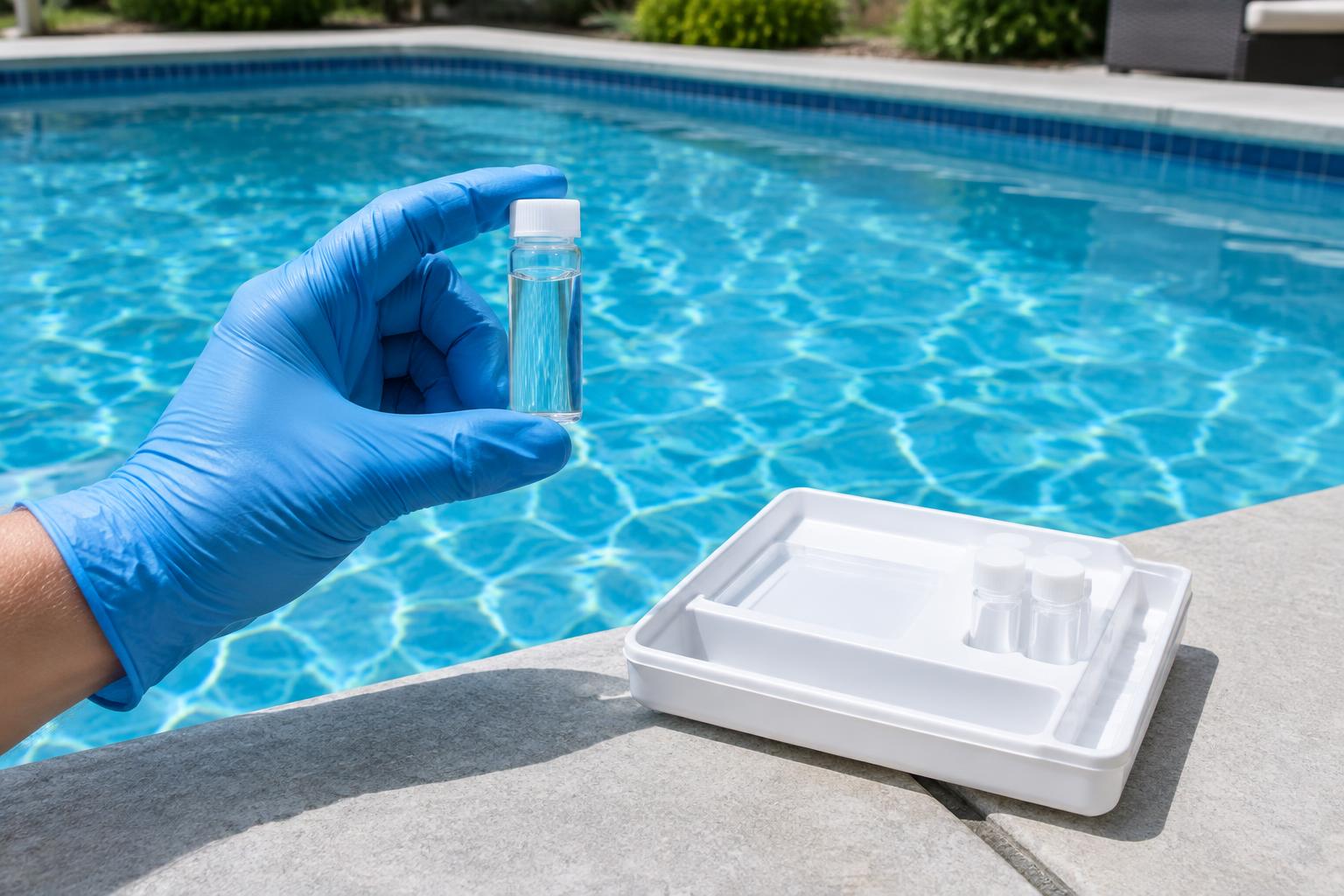
Pool shock is a chemical treatment used to oxidize contaminants in pool water; chlorine-based shock also raises chlorine to help control bacteria and algae. You may need it after heavy swimming, when testing shows persistent combined chlorine, or when treating algae. Choose the product and dose using water-test results, pool volume, and label directions—not a fixed weekly schedule alone.
What does pool shock actually do?
“Shocking” describes a treatment process, not one specific chemical. Chlorine-based shock temporarily raises available chlorine above the pool’s normal operating range. It may help destroy contaminants that accumulate from swimmers, debris, and insufficient routine sanitation.
Three test measurements are useful:
- Free chlorine (FC): Chlorine available to sanitize the water.
- Combined chlorine (CC): Chlorine that has reacted with contaminants, including compounds commonly called chloramines.
- Total chlorine (TC): Free chlorine plus combined chlorine.
Combined chlorine is calculated as total chlorine minus free chlorine, using a suitable test. A persistent elevated reading may indicate a need for oxidation, but measurement accuracy matters—especially when subtracting two similar numbers.
A strong “chlorine” smell does not necessarily mean there is too much useful chlorine. Chloramines may contribute to odors and irritation. Test the water rather than diagnosing by smell alone.
Which type of pool shock should you choose?
The right choice depends on your pool’s cyanuric acid (CYA), calcium hardness, equipment, and current chemistry. “Shock” on the package does not make different products interchangeable.
| Treatment | What it does | Main consideration |
|---|---|---|
| Calcium hypochlorite | Adds chlorine and calcium | Repeated use can raise calcium hardness; unsuitable chemistry may encourage scaling |
| Sodium dichlor | Adds chlorine and CYA stabilizer | Repeated use can raise CYA and increase the chlorine level needed for effective sanitation |
| Liquid pool chlorine | Adds chlorine without CYA or calcium | Strength varies; calculate the amount from the labeled concentration |
| Non-chlorine shock, often potassium monopersulfate | Oxidizes some contaminants | Does not replace a sanitizer or reliably treat an algae outbreak |
Liquid chlorine can be used for a shock treatment even when the bottle is not labeled “shock.” Conversely, non-chlorine shock does not provide the same disinfecting function as chlorine.
Consider your pool finish, too. Undissolved granules may damage or bleach surfaces if used incorrectly. Only choose products compatible with your pool and follow their application directions.
When should you shock a pool?
When testing shows an oxidation problem
Persistent combined chlorine around or above 0.5 ppm is a common reason to investigate and consider treatment. Confirm the reading with a reliable test and follow applicable pool guidance. Some non-chlorine shock products can interfere with combined-chlorine testing, so check your test-kit instructions.
Do not automatically add ten times the combined-chlorine reading. Effective treatment depends on the contaminants, existing chemistry, and product instructions—not one universal multiplier.
When algae is present or strongly suspected
Slippery walls, visible growth, or water that turns green may call for chlorine treatment alongside brushing, filtration, and filter cleaning. Green water can also result from metals, so color alone is not enough to diagnose algae.
Algae treatment may require maintaining an appropriate chlorine level through repeated testing, rather than adding one bag and waiting. High CYA can make treatment more demanding and may require professional advice about water replacement.
After unusually heavy use or contamination
A busy swim day or a storm that introduces substantial debris may increase chlorine demand. Remove debris and test before deciding whether to shock. Rain alone does not automatically require treatment.
Fecal incidents, suspected infectious contamination, or chemical accidents require specific response procedures. Close the pool and consult a qualified professional or public-health guidance rather than relying on routine shock instructions.
When routine chlorination cannot keep up
Unexpected chlorine loss deserves investigation. Possible causes include algae, sunlight exposure, increased swimmer load, or a malfunctioning feeder. Shock may help address some causes, but it cannot repair equipment or correct every chemistry imbalance.
PoolPilot AI can help you organize the next steps from uploaded test readings or a pool photo. A photo cannot measure chlorine, pH, or CYA, so current readings make the assessment more useful. Analyze my pool — free.
How to shock a pool safely: step by step
-
Keep swimmers out and inspect the pool. Remove leaves and other debris. If you cannot clearly see the bottom, do not allow swimming. Check that circulation equipment is working.
-
Measure the water chemistry. Test free chlorine, total chlorine, pH, and CYA; check calcium hardness when considering calcium hypochlorite. Use a test suitable for the expected chlorine range. Very high chlorine can interfere with some chlorine and pH tests.
-
Confirm pool volume and select a compatible product. Read the entire label, including protective equipment, application method, dose, and reentry instructions. Avoid adding more calcium or CYA when those levels are already excessive.
-
Address chemistry issues before treatment. Bring pH into the product’s recommended range if needed. Add adjustments separately, allowing circulation and retesting as directed. Never combine acid and chlorine: they can release toxic chlorine gas.
-
Calculate the dose from the label. Base the amount on pool volume, current readings, product strength, and treatment purpose. A maintenance dose may differ substantially from an algae-treatment dose. Do not assume one bag treats every pool.
-
Apply exactly as directed. Use specified eye and skin protection and avoid breathing dust or fumes. Never mix chemicals, different chlorine products, or old and new product residues. Do not put shock in a skimmer unless the label specifically allows it. Predissolve only if instructed; when directed, add chemical to water, never water to chemical.
-
Circulate, clean, and retest. Run the pump according to the treatment instructions, brush as appropriate, and clean the filter when needed. Evening application may reduce sunlight loss for some chlorine treatments, but label directions take priority. Recheck chemistry before adding another dose or reopening the pool.
Store products sealed, dry, and separated as their labels require. If an unexpected reaction, strong fumes, or exposure occurs, leave the area and contact emergency services or poison control as appropriate.
How do you know the treatment worked?
Look for several signs together: water clarity improves, visible growth is removed, combined chlorine is controlled, and free chlorine becomes maintainable within the appropriate operating range.
Clear water alone does not prove that water is safe. Likewise, cloudy water after treatment does not necessarily mean another dose is needed. Suspended debris, filtration problems, or calcium precipitation may need different action.
PoolPilot AI offers 3 free assessments per month, with no credit card required, to help interpret photos or test readings and suggest next steps. It does not replace testing, product labels, or professional help for serious issues. Analyze my pool — free.
FAQ
Should I shock my pool every week?
Not necessarily. Some product labels or maintenance programs recommend a regular schedule, but actual need depends on testing, swimmer load, and water conditions. Routine sanitation, circulation, and cleaning remain essential even when you use shock.
How long after shocking can you swim?
Follow the product’s reentry instructions and verify that chlorine and pH are back within the required swimming ranges. Waiting a set number of hours is not enough by itself. Non-chlorine products may allow shorter waits, but their labels still govern.
Can I use shock in a saltwater pool?
Typically, yes, if the product is compatible with the pool and equipment. Saltwater pools still use chlorine; the salt cell produces it. A generator’s boost setting may not raise chlorine quickly enough for an active algae problem. Follow manufacturer guidance.
Is shock the same as regular chlorine?
Sometimes the chemical is the same, but the purpose and dose differ. Routine chlorine maintains a sanitizer residual; chlorine shock raises it for a specific treatment. Non-chlorine shock is an oxidizer, not a substitute for maintaining adequate sanitizer.